
Mangal D Karnad
Author & Storyteller
Ten New Stories from Mulky
Moral Stories with Pictures for Children Aged 6–12
Malli and the Mulky Stories 2
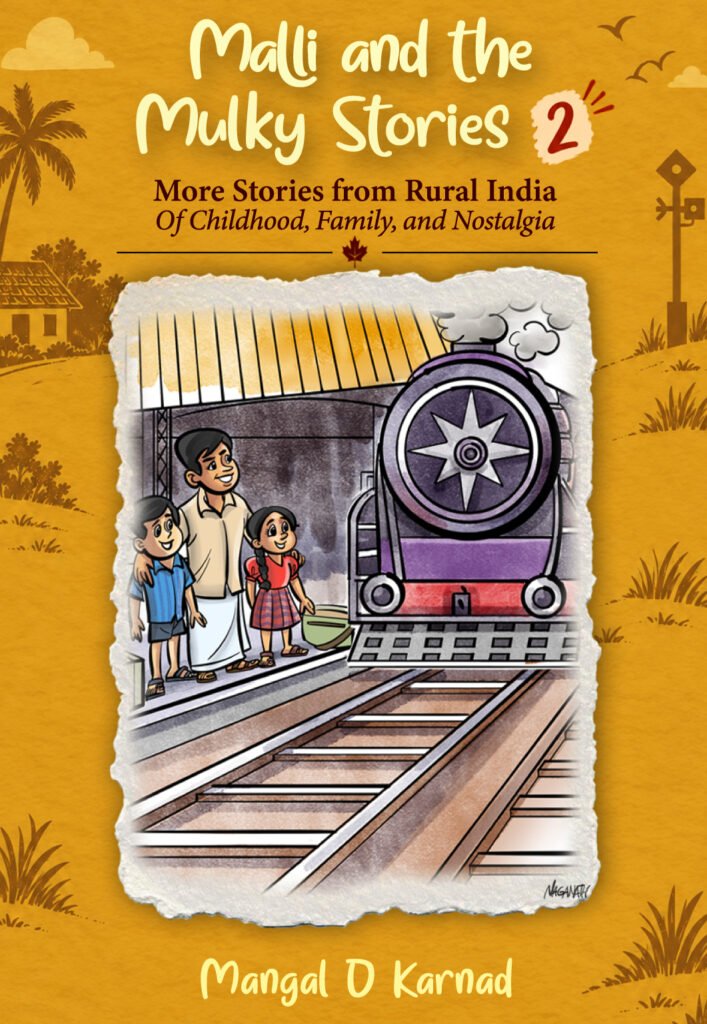
Ten illustrated short stories with moral, set in 1970s coastal Karnataka where a monkey in blue shorts raids the courtyard, a tin of coconut oil goes missing, and someone walks the lanes at night with bells on his staff.
Short Stories with Moral
Children can tell when a lesson is disguised as a story. These ten stories are not that. Malli climbs, argues, gets things wrong, and works out why only afterwards, the way children actually do.
Each story closes with a short section called What Malli Learned: a line or two in a child's own words, not an adult's. A mistake is not the end of the story. People are rarely only right or only wrong. The thing that frightens you at night may be the thing keeping you safe.
Nobody here is a villain. Nothing is solved by magic. The moral arrives the way it does in life, a little late, and usually from someone unexpected.
Moral Stories with Pictures, Illustrated Meaningfully
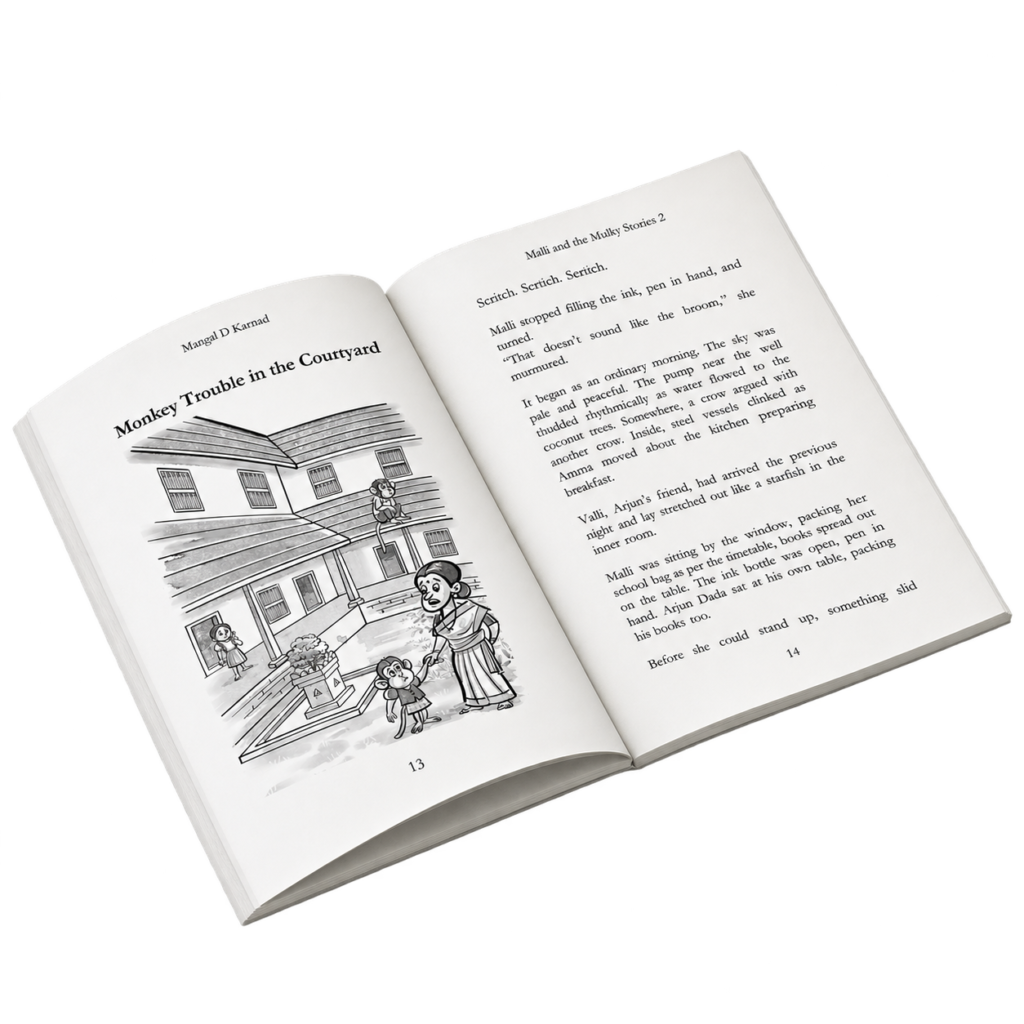
Every story opens with an original illustration by Naganath Gowripura, a cartoonist and visual storyteller with over 15,000 cartoons published across leading publications in Karnataka and India, and more than twenty-five years in advertising and media.
The pictures are not decoration. They show the world where the stories took place:
• Courtyards, cowsheds and red tiled roofs
• Kitchens, festivals and things made by hand
• Ponds, wells, and paddy fields
• Neighbours, relatives, helpers, and one very opinionated cat
• Everyday objects a child today has never seen
Why Parents and Grandparents Choose These Stories
One story is one bedtime. Ten stories last a fortnight. Each ends with an Author's Note written for the adult reading aloud, inviting you to tell your own version: how you learned to swim, who did the cooking in your house, what you were afraid of at night and more.
Who These Stories Are For
• Children aged 6 to 12 read aloud from six, read alone from eight
• Parents looking for Indian moral stories that do not lecture
• Grandparents who recognise this world and want to pass it on
• Teachers and school libraries wanting short, complete stories
• Families living outside India who want their children to understand India.
A Second Visit to the Same Courtyard
Malli is older in this book. The trouble has not improved. She negotiates with guests who come unannounced, loses something that was never hers to keep, and discovers that the man who walks the lanes at night is the reason she can sleep.
With a foreword by Ramendra Kumar.
Malli and the Mulky Stories 2 continues the series that began in a courtyard in 1960s Mulky. These ten stories move into the 1970s, when the ferries were giving way to the highway bridge and a child could still spend a whole afternoon up a tree. They are drawn from the author's own childhood, with some names and details changed. A glossary at the back explains every Konkani and Kannada word, so a reader anywhere can follow without stopping. Readers new to the series can begin here: each story stands on its own, and so does each book.
Malli and the Mulky Stories 2 is Available in:
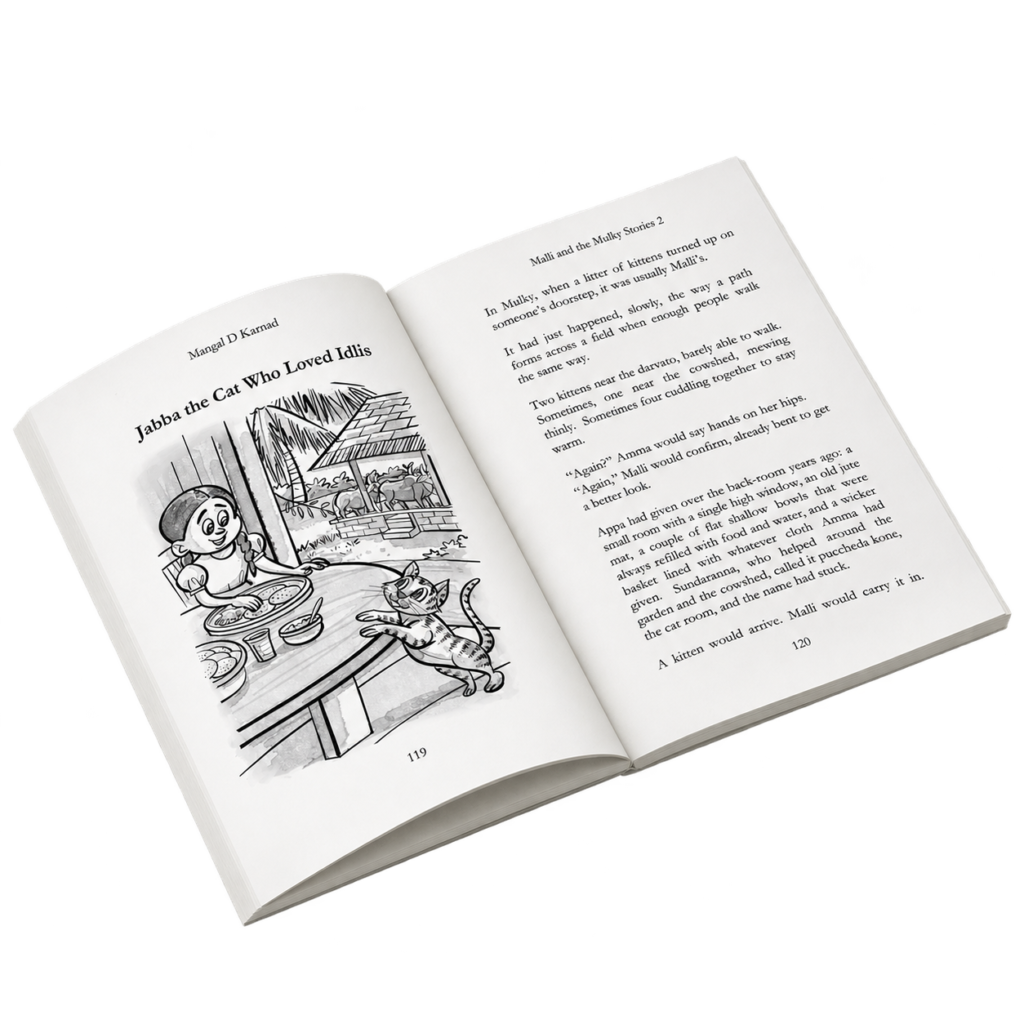
Paperback and e-book, from this website and from Amazon India.
Frequently Asked Questions
Children aged 6 to 12. The stories work well read aloud from about six, and most children read them on their own from around eight. Each story is complete in itself, so a younger reader can finish one in a single sitting.
No. Every story is complete in itself, and so is every book. Readers who know Book 1 will recognise the family and the courtyard, but nothing here depends on you having read it.
Yes. Every story opens with an original black-and-white illustration, and the pictures run through the book rather than appearing only at the start.
Naganath Gowripura, a cartoonist, animator and visual storyteller with more than 15,000 published cartoons and over twenty-five years in advertising and media. He also illustrated Malli and the Mulky Stories Book 1.
Most moral stories decide on the lesson first and build a story to fit it. These start with what actually happened and let the lesson arrive on its own. There are no villains, no magic and no speeches.
Yes. Each story is short and self-contained, which suits reading periods and library hours, and the Author's Notes give teachers a discussion prompt for each story.
In Mulky, a real coastal town in Karnataka between Mangalore and Udupi, where the Shambhavi river meets the sea. These stories are set in the 1970s.
Get In Touch
Ready to Read? Order Malli and the Mulky Stories 2
Or get in touch for speaking enquiries, school visits, workshops, or wholesale orders.
Copyright ©2026 Mangal D Karnad, All Rights Reserved · Designed by Fablesquare