
In Conversation with Sneha Khanwelkar: An Author’s Journey
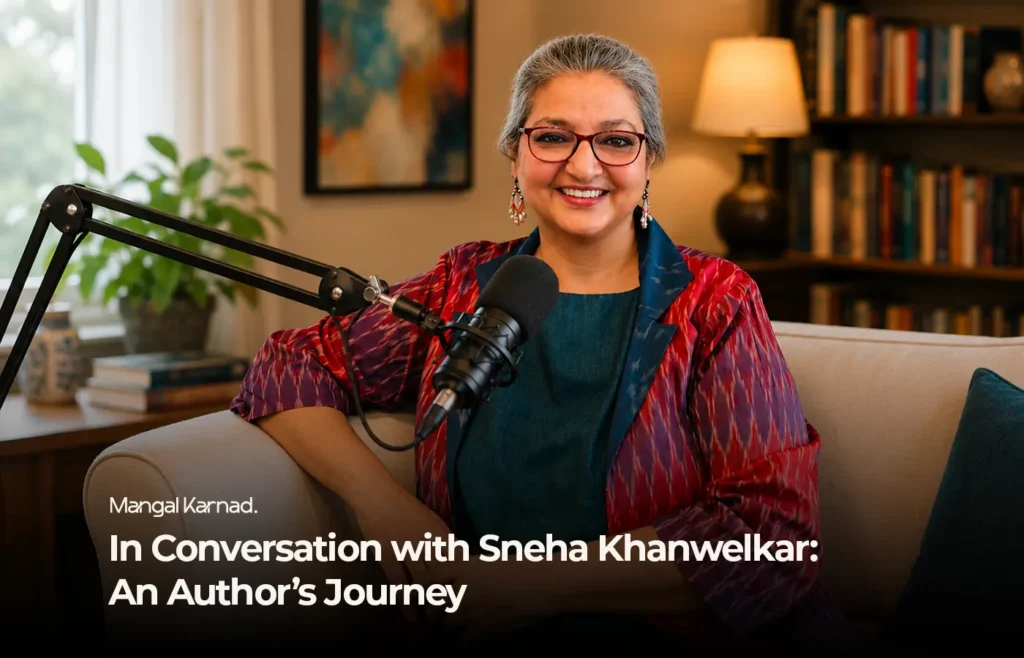
Welcome to Author’s Journey, a new interview series on this site where I talk with writers about how their books actually came to be: the false starts, the discipline, the doubts, and the moments that made it real. I’m Mangal D Karnad, author of Folded Away Softly and Malli and the Mulky Stories, and I wanted a space to learn out loud alongside other authors and share that with you.
To open the series, I’m delighted to feature Sneha Khanwelkar, author of Deserving and The Echo of My Chalk. Sneha rebuilt her life after losing her husband young, moved from teaching to technical writing, and turned her experience of breaking stereotypes into books about resilience and self-discovery.
This Sneha Khanwelkar author interview covers her spark, her writing routine, the editing lessons that stung, and the relationship-first way she reaches readers.
Inspiration and the Author’s Journey
What was the spark that made you want to be an author, and when did you first realise this path was truly yours?
The spark came from wanting to share how I broke stereotypes in my life. For years, people encouraged me to write, but I resisted. I felt attitude couldn’t be taught; it had to be lived. In 2020, a Mass Communication college in Mumbai included my one-minute video on breaking stereotypes in its curriculum, which showed me that my experiences could resonate beyond my own circle.
Encouragement from friends, colleagues, and students gradually nurtured my desire to write. In 2021, I joined Sweta Samota’s workshop for aspiring authors. The advice that stayed with me was simple: the story is already in your mind, you just have to put it on paper. That gave me the push I needed. I began writing daily, and within three months, my manuscript was complete. When it was published, a friend said, “Wow, Sneha, you are now a published author.” That is when it truly sank in. I had crossed the threshold into authorship.
How did your upbringing, career, and daily experiences shape your books?
My father was a magazine editor, so I grew up surrounded by words and print, with a childhood steeped in reading and even visits to the press. That early exposure sparked both a love for reading and an understanding of publishing.
Later, I carried this inclination into my career, from school magazines to initiating and editing newsletters in the companies I worked for and at the Rotary Bangalore Lakeside club. As technology evolved, I was happy to scale up, but the core willingness to write and edit was always there.
My books reflect this lifelong engagement with words. Deserving grew from breaking stereotypes and rebuilding after loss. The Echo of My Chalk draws on my teaching career and the human side of education.
Is there a core memory that heavily influenced the themes you explore?
Losing my husband at a young age was a defining moment that challenged me to rebuild my identity beyond societal expectations. It inspired my writing on resilience, self-discovery, and breaking stereotypes. Through both my books and my blogs, I share reflections on human connection, resilience, transformation, humanity, generosity, and kindness, hoping my experiences will resonate with and inspire others.
The Writing Process
Are you a plotter or a pantser?
I fall somewhere in between. I usually begin with a broad structure and key themes to give the work direction, but many of the stories and reflections surface organically as I write. I like to leave space for memories and insights to emerge during the process, so the writing feels both anchored and alive.
What does your ideal writing environment or daily routine look like?
I prefer a quiet environment with minimal distractions, where I can focus fully on the page. Mornings are my most productive time, when my mind feels fresh and uncluttered. I follow a 20-minute writing and 5-minute break pattern and usually write for a couple of hours, with a few cups of tea, my laptop, and uninterrupted time. That simple routine helps me slip into the flow and stay connected to my thoughts.
How do you navigate writer’s block, self-doubt, or creative burnout?
When I feel stuck, I step away from the writing. Walking, travelling, reading, meeting people, or immersing myself in activities like Argentine Tango often help me reset. Over time, I have learned that creativity cannot be forced; it needs space to breathe. Sometimes the best way forward is simply to live life, gather new experiences, and return to the page with a fresh perspective.
What was the most difficult chapter to write in your latest project?
The most difficult chapters were the ones that asked me to revisit emotionally challenging periods of my life. Writing honestly about loss, struggle, and personal growth meant reliving those experiences in vivid detail. It was painful at times, but those very chapters became the most meaningful, because they carried the raw truth of my journey and the resilience that followed.
You mentioned that you took a course. How did it help you?
The course gave me both structure and confidence. It helped me understand the self-publishing process, organise my ideas, and approach writing as a disciplined craft rather than a hobby. Just as important, it connected me with a community of writers who shared similar aspirations, a reminder that authorship is not a solitary pursuit but a shared one. One practical takeaway was the 20-minute writing and 5-minute break rhythm, known as the Pomodoro Technique, a simple timer method that improves focus and consistency.
A note from Mangal: Sneha’s point about structure is exactly why I run my own Story Writing Workshop for new and emerging writers. If her experience resonates, that is a good place to begin.
Editing and Growth
How has your writing style evolved from your first manuscript to your published work?
I have always written with sincerity and honesty, but my style has matured over time. In the beginning, I focused heavily on information and detail, almost like documenting experiences. Gradually I realised that what truly connects with readers is not just facts, but the story behind them: the emotions, the human moments, the lived truth. Today my writing is clearer, simpler, and more authentic. I try to balance structure with heart, so that every page carries both meaning and feeling.
What was the hardest piece of feedback you had to accept and apply?
The hardest advice was learning that not everything I write belongs in the final manuscript. As writers, we often grow attached to certain passages because they carry personal meaning. Accepting that some of those lines had to go was difficult, but it taught me the value of ruthless editing. Keeping only what truly serves the reader became an important lesson, one that strengthened both my writing and my voice.
The hardest lesson was letting go of lines I loved, and keeping only what truly serves the reader.
Looking back, is there anything you would do differently in your early days of writing?
I would have paid more attention to pacing and discipline. In the beginning I wrote in long, irregular bursts, waiting for inspiration to strike. Over time I learned that consistency matters more than intensity; even small, steady sessions build momentum. If I could revisit those early days, I would establish a routine sooner, treating writing as a daily practice rather than an occasional pursuit.
Writing grows through consistency.
How do you know when a draft is truly finished and ready for the world?
A draft is never truly perfect. For me, it is ready when the message is clear, the structure holds, and further edits no longer add meaningful value. At some point you have to trust the work, let it go, and allow it to find its place in the world. That act of release is as much a part of writing as the words themselves.
Publishing and the Industry
What surprised you most about your author journey: editing, publishing, or marketing?
Sales and marketing surprised me the most. Writing the book is only half the journey; reaching readers calls for an entirely different set of skills. It involves networking, visibility, presentations, social media, and relationship-building, areas that demand as much energy as the writing itself. I also realised that an author must be clear about one essential question: why did I write this book? That clarity becomes the compass for every effort to connect with readers.
How do you handle both positive and negative reviews from readers?
Positive reviews are always encouraging, because they affirm that the book has connected with someone. Sometimes feedback gives you a completely different perspective on your work, something I experienced with The Echo of My Chalk. Interestingly, I have not received much negative feedback, which in itself can be limiting, because constructive criticism is often what helps a writer grow. With the little I have received, I try to see how I can use it to sharpen my writing. I absorb all feedback thoughtfully, but I do not let it define my confidence. At the end of the day, every response is part of the larger conversation between writer and reader, and that dialogue is what keeps me evolving.
What is the most rewarding part of being an author once your book is out?
The most rewarding moments are when readers share that something I wrote resonated with them or helped them see their own life differently. Knowing that my experiences have touched another person’s journey is deeply fulfilling. It reminds me that writing is not only about telling my story, but about creating a bridge where others can find meaning in theirs.
The reward is when words bridge meaning.
What advice would you give to aspiring writers just starting their journey?
Start writing before you feel ready. Consistency matters more than perfection: write regularly, read widely, and welcome feedback with grace. Growth happens through revision, not in waiting for flawless drafts. Most importantly, choose subjects that genuinely matter to you, because passion fuels persistence. A simple step like creating a table of contents first can give your ideas structure and help you stay focused as the story unfolds.
Start before you feel ready, and let consistency guide your growth.
What is your marketing and sales approach?
My approach is relationship-based rather than sales-driven. I share my journey through talks, social media, blogs, podcasts, and personal interactions, focusing on meaningful conversations around the themes in my books. For me it is less about pushing sales and more about building genuine connections. Word-of-mouth plays a big role too; when readers resonate with the message, they often share it with others, and the book naturally finds its way into new lives. That organic connection is far more powerful than any traditional sales pitch.
My books travel through conversations. Word-of-mouth is the most powerful publicity.
Closing Thoughts
My thanks to Sneha for opening this series with such honesty. If her story moved you, you can find Deserving and read more about her work. You can also follow the rest of the Author’s Journey series here on the blog. If you are an author who would like to be featured, or a reader with someone to suggest, please get in touch.
And if Sneha’s reflections on structure and consistency struck a chord, my own Story Writing Workshop is built for exactly that first step.
Reading this conversation felt deeply personal.
Sneha has been one of the people who quietly inspired me to take my own writing seriously. Not just because she became an author, but because of the courage, resilience, and consistency that sit behind her work.
One line from this interview stayed with me:
“Start writing before you feel ready.”
As the author of *Before the Tide Turns*, I know how true that is. Every book begins long before publication. It begins with showing up to the page when no one is watching, trusting a story before anyone else can see it.
What I admire most about Sneha’s journey is that she writes from lived experience. Her reflections on loss, reinvention, and self-discovery carry the kind of authenticity that readers immediately recognize.
And what a beautiful title *The Echo of My Chalk* is. It speaks to the idea that the people who teach us continue to shape us long after the classroom is gone. In many ways, that is what good books do as well. They leave an echo.
Thank you, Sneha, for sharing your journey with such honesty and generosity. Your words have inspired many writers, myself included, and I am certain they will continue to encourage many more to begin their own author journeys.