Mangal D Karnad
Author & Storyteller
Rooted in Mulky, Karnataka
A Storytelling Session in Bengaluru, Told Live From the Book
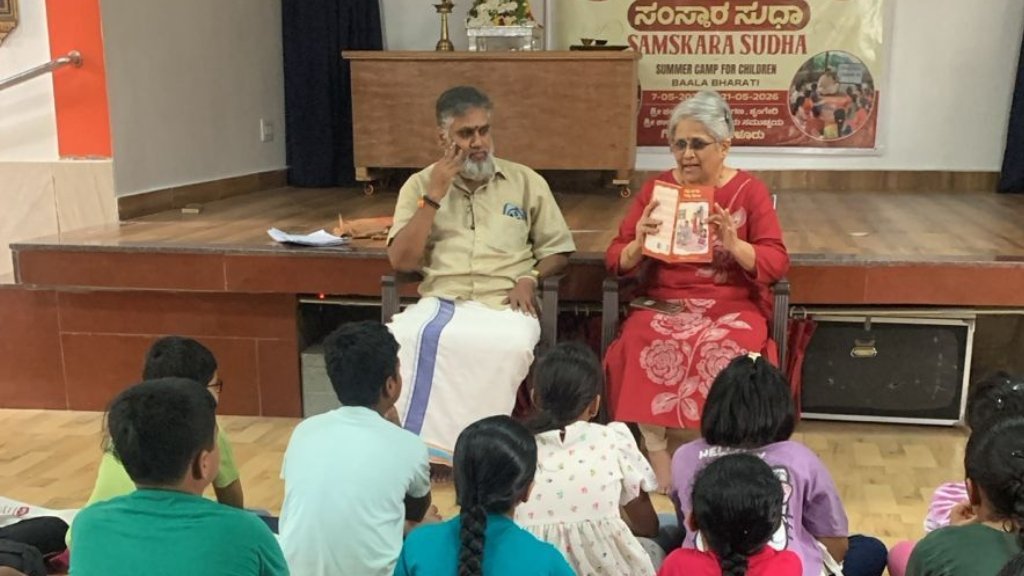
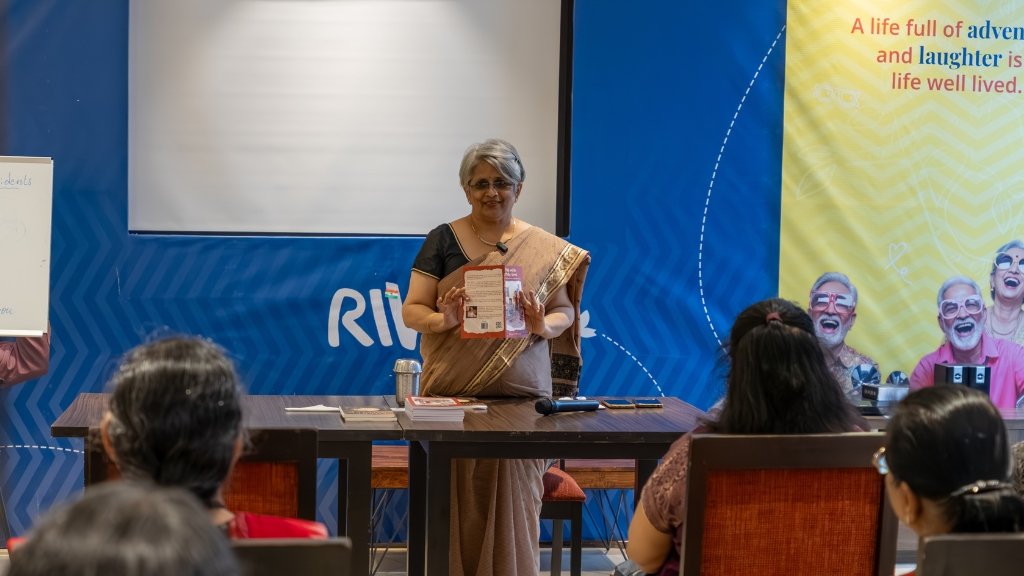
This is a one-hour storytelling session in Bengaluru led by Mangal D. Karnad, author of Malli and the Mulky Stories. The stories are told and read live from the book in schools, libraries, retirement communities, bookshops, festivals, and private gatherings. Each event is shaped around the audience in the room, and unfolds at a calm, unhurried pace. The aim is simple: to bring people into the world of the stories, and into conversation with one another.
Available across Bengaluru in person, and online or outstation by arrangement. To enquire about Storytelling Session for your school, library, community, or gathering, please write in.
What this Storytelling Session is.
A storyteller, a chair, a small audience, a book, and an hour. That is the shape of the event. I read and tell stories from Malli and the Mulky Stories, a collection set in the coastal town of Mulky in Karnataka. The stories follow a young girl, her family, and the small but vivid world around her. They are written for children but are relevant for any listener because the experiences inside them, of curiosity, fear, fairness, and care, belong to everyone. The hour is shaped by who is in the room. With children, I lean into voice, action, and questions. With seniors, I read more, pause more, and leave room for memory. With mixed family or community groups, the event moves between both.
Who this Storytelling Session is for
The same hour works for three very different audiences. The stories don't change. The way they are told does.
For schools and children (ages 6–14)
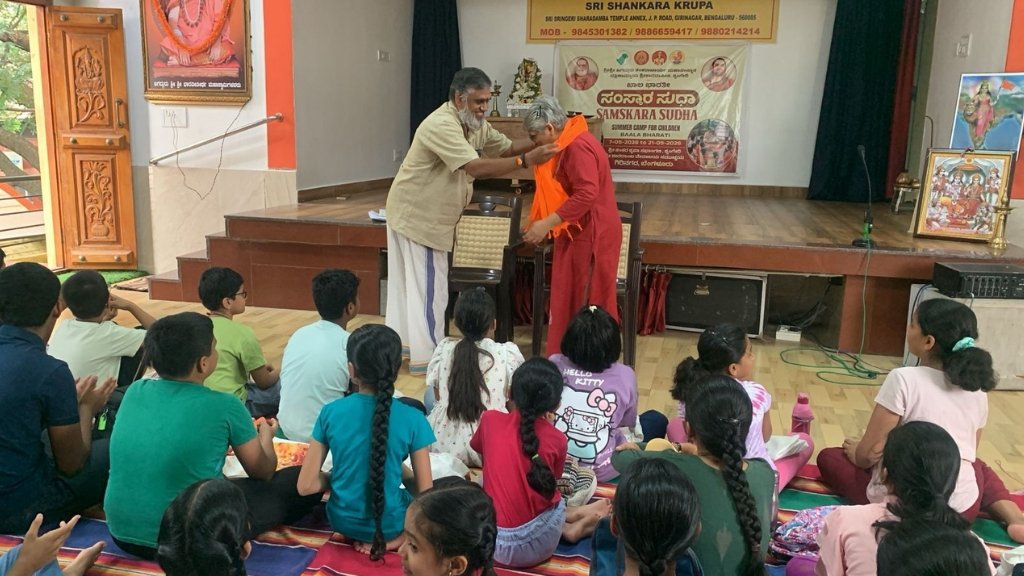
Held in classrooms, school libraries, or as part of a literature event. The event is interactive, paced for younger attention, and rich in voice and gesture. Children are invited to ask questions, share their own memories, and reflect on the small choices the characters make. Suitable for groups of up to 50 children.
Particularly well suited for:
• Literature and reading events in schools
• Library reading hours and book club sessions
• Cultural and language week programming
• Author visits tied to the school's reading list
For seniors (retirement communities, senior centres, day clubs)
Held in the community room of a retirement home, a senior centre, or a day-care for older adults. The pace is gentler. I read more from the page and tell less from memory, so listeners can settle into the rhythm of the prose. The stories' settings small coastal towns, courtyards, kitchens, and slow afternoons often draw out the audience's own childhood memories, which becomes the warmest part of the hour. Suitable for groups of any size.
Particularly well suited for:
• Retirement community programming
• Senior day-care and assisted living centres
• Cultural afternoons at clubs and associations
• Memory and reminiscence-focused sessions
For families and community gatherings
Held in libraries, bookshops, cafés, community halls, festivals, or private homes. A mixed audience of children, parents, and grandparents in the same room. The event moves between voices and registers some moments aimed at the youngest in the room, some at the oldest, and most somewhere in the middle. These events often end with a long conversation. Suitable for groups of 15 and above.
Particularly well suited for:
• Library and bookshop reading events
• Literature festivals and children's lit festivals
• Café and community space evenings
• Family gatherings and private hosted events
The book the session is built around
Malli and the Mulky Stories is a collection of short stories for children set in Mulky, on the coast of Karnataka. The stories follow Malli, her family, and her small but vivid world of jackfruit trees, courtyards, family kitchens, wells, ponds, and the texture of everyday life in a small coastal town. These are stories without exaggerated villains or dramatic resolutions. Values emerge naturally through lived experience. The same quality that lets children sit with them at bedtime is what lets seniors find their own childhoods inside them.
Why storytelling still matters
Storytelling is one of the oldest ways human beings have shared meaning. Long before books, classrooms, or screens, communities sat around fires, courtyards, and village squares, and told stories. We learned who we were through them. That instinct has not gone away. It has only become harder to honour. The importance of storytelling, especially today, lies in three things that do it well.
Storytelling builds attention
In a culture of short clips and quick scrolls, sitting through a told story trains the mind to stay with one thread. For children, this is a foundational reading and learning skill. For older adults, it is a return to a familiar, slower rhythm. For everyone in between, it is rest.
Storytelling builds belonging
A story heard together is not the same as a story read alone. The room laughs at the same moment, falls quiet at the same moment, and remembers it later as a shared experience. In schools, this builds classroom cohesion. In senior communities, it reduces isolation. In families, it is one of the few activities that genuinely bridges generations.
Read More
Storytelling carries culture
Specific places, words, and customs live inside stories. A jackfruit tree in a Mulky courtyard, a kitchen on a festival morning, the names of small towns and people these reach listeners in a way no textbook can. The event does this without lectures or asides. The culture simply lives inside the stories.
Read More
The art of storytelling — how I run the session
A few storytelling techniques I rely on:
Voice and pace
The voice carries the story. I shift register for different characters, slow down at moments of feeling, and speed up where the rhythm asks for it. Long sentences are read calmly. Short ones are allowed to land.
Pauses and silence
A pause is not empty time. It is the moment the listener catches up to the character. Most untrained storytellers fear silence and fill it. A trained one uses it.
Audience interaction
Not as a gimmick. Children naturally interrupt and ask. Seniors naturally remember and share. I let those moments happen and stitch them back into the story when they end. The event feels like a conversation, a lived experience.
Language and code-switching
Some words live better in Kannada, Konkani or Tulu than in English. When a moment in the story calls for it, I switch. The audience does not need translation the story holds them, and the word arrives where it belongs.
Reading versus telling
Some passages I read directly from the book. Others I tell from memory. Reading respects the writing. Telling respects the moment. A good storytelling event moves between both.
Read More
Telling a story well is a craft, especially one rooted in a specific place. The art of storytelling is less about performance and more about presence: about giving the room time to enter the story without forcing the doors open.
A short definition of storytelling
Storytelling is the practice of conveying events, emotions, and meaning through a narrative voice spoken aloud, read, or shared between a teller and an audience. Unlike reading silently, storytelling is a live exchange. The teller shapes the story for the room, and the room shapes it in return. It is one of the oldest forms of human communication and remains one of the most effective ways to teach, to remember, and to belong.
Storytelling examples from the session
A few moments from past events that show how the same stories work differently across rooms.
A story about a jackfruit tree
Malli is up on a jackfruit tree, and her brother is trying to help her down. With children, this becomes a story about courage and the small terror of looking down from a height. With seniors, the same story brings out memories of their own trees, their own falls, their own grandmothers calling them indoors.
A story about anklets at night
Malli hears anklets in the courtyard after dark. The story unfolds gently and rationally, without spectacle. Children sit very still through it. Seniors smile at the familiarity of the fear. Both find their own way in.
A story about a festival kitchen
A morning of cooking, small disagreements between siblings, and quiet kindness in a Mulky family kitchen. Family audiences especially three generations together talk for a long time after this one. Grandmothers describe their own kitchens. Grandchildren ask questions they have never thought to ask before.
These are not lessons. They are moments. The work of a storytelling session is to make room for them.
How the hour usually unfolds
Every event shifts a little, depending on the audience. But the shape of the hour is broadly this.
Total duration: Approximately 1 to 1 hour 15 mins.
DOWNLOAD THE WORKSHOP STRUCTURE
Format and logistics
An event is intentionally low-set-up. The book, a chair, the audience.
Where I hold storytelling sessions
In Bengaluru, mostly in person. Schools, libraries, retirement communities, bookshops, cafés, community spaces, and private homes. Online events are available over Zoom or Google Meet. Outstation events anywhere in India are available by arrangement, with travel and stay arranged or reimbursed by the host.
What you need to provide
• A quiet room or space, indoor or shaded outdoor
• Seating for the audience, ideally facing one direction
• A chair and a small side table for the storyteller
• A microphone for audiences larger than around 30 listeners
Read More
What I bring
• Copies of Malli and the Mulky Stories for display and sale
• A short list of stories chosen for the specific audience
• Optional Q&A and signing time after the event, if the host wishes
• Photo Opps, if the host wishes
Read More
Group size
Events work best with audiences between 15 and 60 people. Smaller groups also work well in a more conversational setting. Larger audiences are possible with a microphone.
About the Storyteller
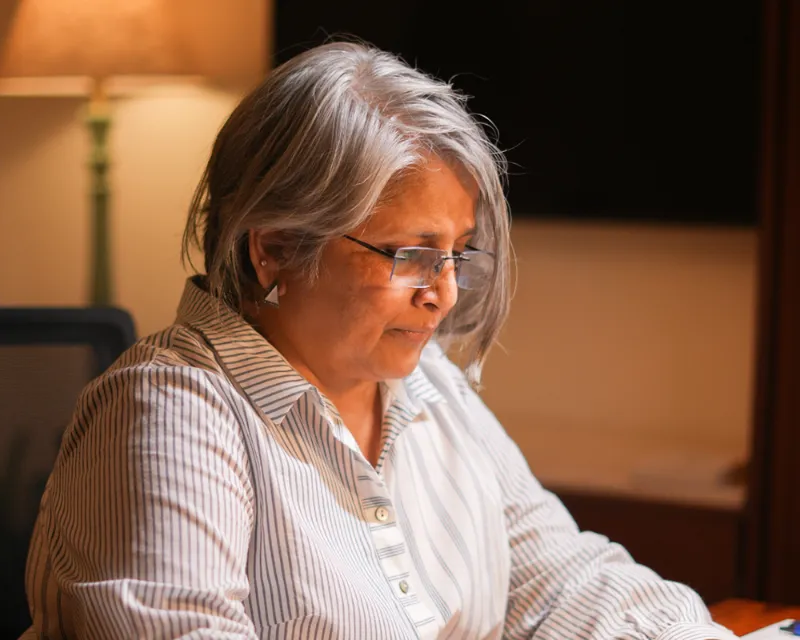
Mangal D. Karnad is a Bengaluru-based author of children's fiction and poetry. His books include Folded Away Softly, a poetry collection, and Malli and the Mulky Stories, short stories for children set in coastal Karnataka. His storytelling events are an extension of the same quiet, observational voice that runs through his books — calm in pace, rooted in place, and built around real moments rather than spectacle.
Frequently asked questions
An storytelling session is a live event where the author tells and reads stories from their own book to a gathered audience. In this event, I tell and read from Malli and the Mulky Stories, with pauses for questions, conversation, and shared memories. It runs for approximately one hour.
Events take place across Bengaluru in schools, libraries, retirement communities, bookshops, cafés, community halls, and private homes. I can travel to any location within the city by arrangement.
Yes. I am open to holding online author storytelling events over Zoom or Google Meet. The format and duration stay broadly the same, with adjustments for the online setting. Online events are well suited for distributed school groups, residents of senior communities in other cities, and family audiences spread across locations.
Yes. I am open to outstation author storytelling events anywhere in India. For outstation events, the host or client is requested to bear the cost of travel and stay in addition to the event fee. The exact arrangement booked directly (preferably) or reimbursed. Can be agreed in the enquiry stage.
The event is suitable for three audiences children aged 6 to 14, seniors in retirement communities and senior centres, and mixed family or community gatherings. The stories stay the same. The pace and style are adjusted to match the audience.
The event runs for approximately one hour, including time for stories, questions, and conversation. Shorter or longer formats can be arranged for festivals, school events, or community gatherings.
Group sizes between 15 and 60 listeners work best. Smaller, more intimate groups also work well in conversational settings. Larger audiences are possible with a microphone.
Stories are told primarily in English, which matches the language of the book. A few words and phrases in Kannada, Konkani or Tulu appear naturally where they fit the story. No translation is needed for English-speaking audiences.
For children, storytelling builds attention, vocabulary, and a love of reading. For seniors, it offers a familiar, slower rhythm, brings up memory, and reduces isolation. For everyone, it builds a sense of belonging through a shared experience.
Please write in through the enquiry form below with the audience type, date, location, and group size. I will respond with availability and details.
To enquire about an author storytelling event
Please write in with a few details the audience, the date you have in mind, the location, and an approximate group size. I will respond with availability and the next steps.
Copyright ©2026 Mangal D Karnad, All Rights Reserved · Designed by Fablesquare